

Cart is empty. Please go to your home page for listing it.
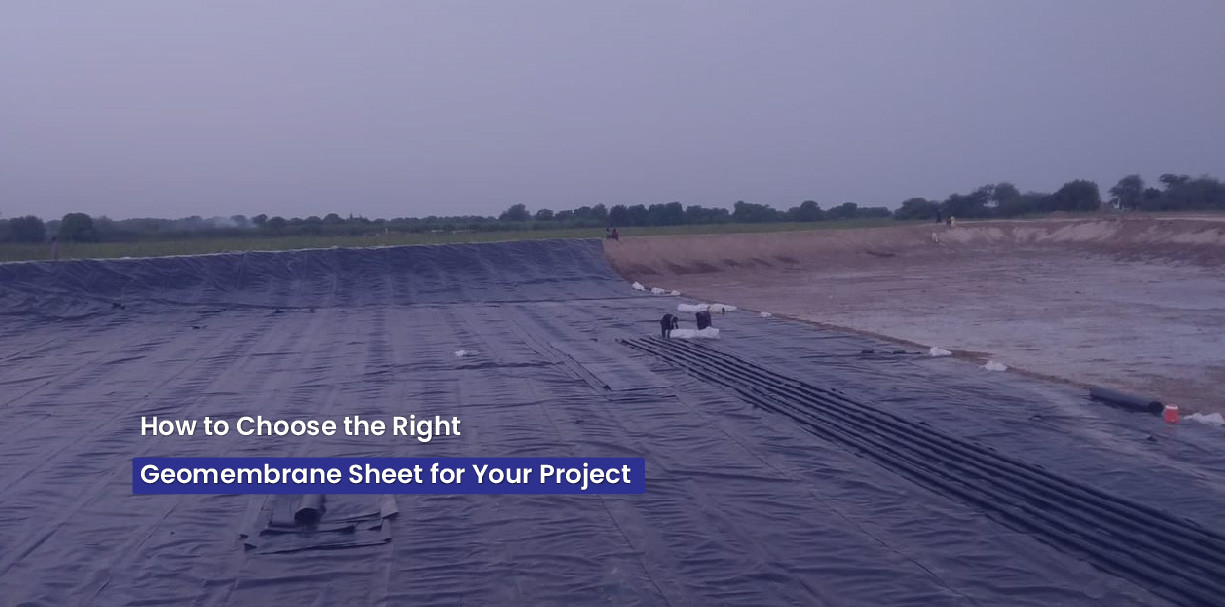

For the success of your construction or engineering project selecting the appropriate geomembrane sheet is essential for your project. Geomembranes are mostly used to control liquids, gases, and solids. It is frequently used in applications such as landfills, wastewater treatment plants, mining operations, and water storage systems. A Geomembrane Sheet is a versatile and durable solution for environmental protection and containment needs, offering reliable performance and peace of mind.
When selecting a geomembrane sheet, several factors to consider, including:
Material:
It is made from a variety of materials, including polyethylene (PE), polypropylene (PP), and polyvinyl chloride (PVC). Each material has specific characteristics, such as flexibility, durability, and resistance to chemicals and UV radiation. It is important to select an appropriate material that is suitable for your specific application and environmental conditions
Benefits of selecting the right material :
Effectively preventing leakage of liquids, gases, and contaminants
Offer excellent flexibility and conformability to irregular surfaces and terrain
Facilitating ease of installation and ensuring proper containment
Designed to withstand prolonged exposure to aggressive chemicals
Ensuring extended service life and minimizing the need for frequent replacements
Enhanced safety by minimizing the risk of leaks, seepage, and structural failures
The strength and durability of the geomembrane sheet are greatly affected by its thickness. Thicker sheets are difficult to install and often more durable for cuts and damage. It is important to choose a thickness that is appropriate for your project's requirements.
Benefits of choosing an appropriate thickness of geomembrane:
Effectively withstand the anticipated loads, stresses, and environmental conditions
Reducing the risk of leakage of liquids, gases, and contaminants
Ensuring reliable containment and protection of underlying structures and the environment
Offer greater stability and resistance to deformation, wrinkling, and shifting during installation
Provides an additional safety margin against unforeseen or unexpected factors
Seams that can be created by welding, adhesive bonding, or mechanical attaching, are frequently used to connect geomembranes. It is important to select a type of seam that is compatible with your project's requirements and that is appropriate for the thickness and structure of the geomembrane sheet.
Benefits of choosing the correct type of seam:
Minimizing the risk of leaks
Ensuring reliable containment of liquids, gases, and contaminants
Ensures a secure and impermeable bond between geomembrane panels
Reducing the likelihood of seam failure, tears, or ruptures
Offer flexibility in accommodating specific project requirements
Reducing labor costs, installation time, and potential errors
The installation of geomembranes requires specialized equipment and expertise. It is important to select a geomembrane sheet that is suitable according to installation techniques and select those tools for installations that are easy to use.
Benefits of selecting a suitable sheet for installation:
Ensures compatibility with the specific site conditions
Facilitates easier handling, manipulation, and installation
Minimizing labor costs, installation time, and potential errors
Reducing the risk of leaks or failures
Ensuring the integrity of the containment system
preventing leakage and maintaining the effectiveness of the containment system
Material, thickness, and size are significantly dependent on the cost. Selecting a cost-effective Geomembrane sheet is most important that meets your project's requirements. By choosing a cost-effective option, you can ensure that you get the most value out of your investment.
Benefits of choosing the cost-effective option of geomembrane:
Helps in minimizing upfront expenses associated with materials procurement
Allowing for more efficient budget allocation across the project
simpler installation requirements, reducing labor costs, equipment needs, and installation time
Allowing for customization to suit specific project
Minimizing waste and environmental impact
Selecting an appropriate geomembrane sheet for your project needs to be careful consideration of several factors, including material, thickness, seams, installation, and cost. By taking these factors, you can ensure that you select an appropriate geomembrane sheet that is suitable for your project's requirements and that will provide long-lasting performance and durability.
Various types of geomembrane materials available offer tailored solutions for diverse containment needs. It provides flexibility, durability, and compatibility with different environmental conditions, ensuring reliable performance in various applications.
PVC Geomembrane: It contains high levels of polyvinyl chloride resin mixed with plasticizers. They provide outstanding chemical resistance, high strength, puncture resistance, and UV light resistance. They are commonly used in mining, industrial waste containment, and chemical processing applications.
HDPE Geomembrane: It is made from high-density polyethylene. It offers excellent properties such as high strength, durability, stress tear resistance, chemical stability, and resistance to environmental stress cracking. They have a protracted service life of up to 70 years, and are commonly used in applications like domestic waste landfills, solid waste landfills, sewage treatment plants, artificial lakes, and tailings treatment.
Decora offers PVC and HDPE geomembrane sheets. Decora's sheets have certainly fulfilled your expectations in terms of performance and reliability and also boast environmental credentials that align with your commitment to sustainability. It provided durability, easy to install, stopped leaks, and was environmentally friendly.

As a PVC industry leader, we offer more than just PVC flooring products – consultation, installation, maintenance, and a customer-centric approach emphasizing honesty, transparency, and exceptional service
0 COMMENTS